Summary: The Bukit Brown tomb of Tan See Neo 陳絲娘 (d. 1933), grandmother of Lim Kim San 林金山, Singapore's "Mr HDB", records the family name that he himself said he never knew. The stone names her sons, including his father Lim Choon Huat 春發, her grandsons, including Lim Kim San 金山, and the family's ancestral place, 廈門古楼 (Amoy).
陳絲娘,林金山之祖母 | Tan See Neo, grandmother of Lim Kim San
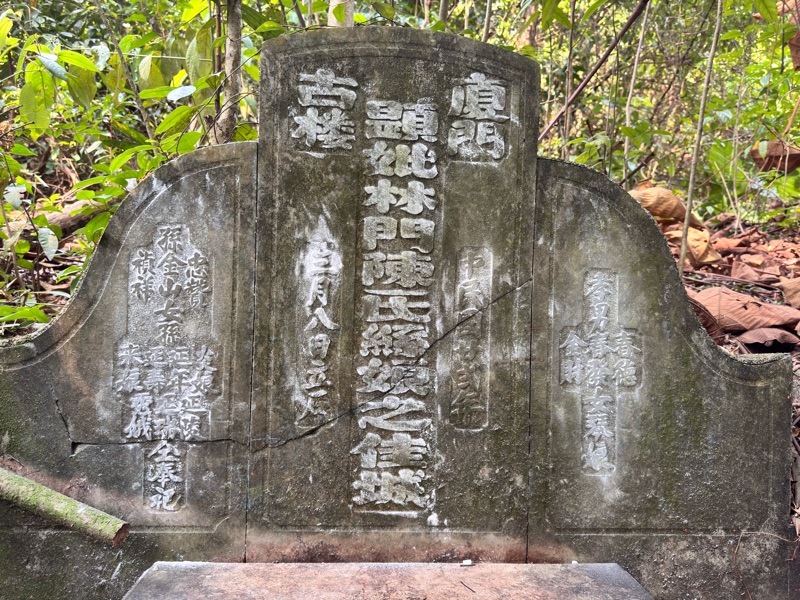
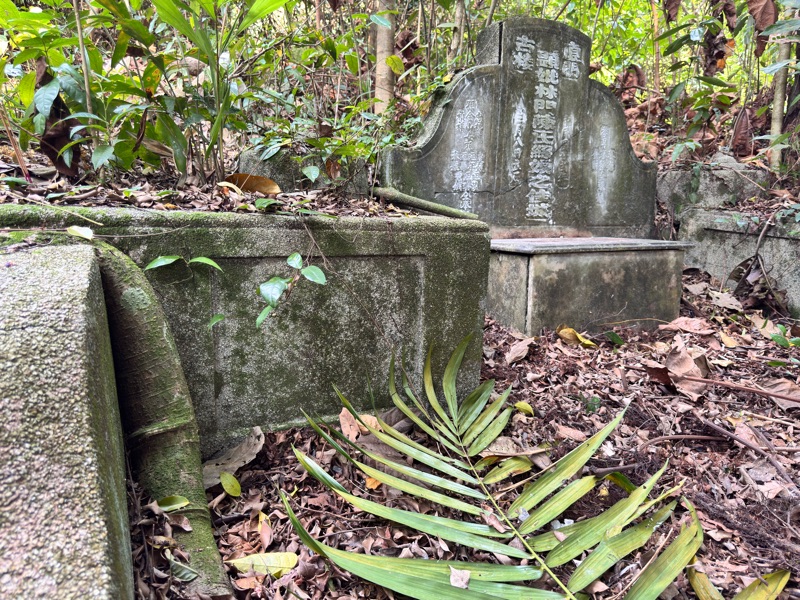
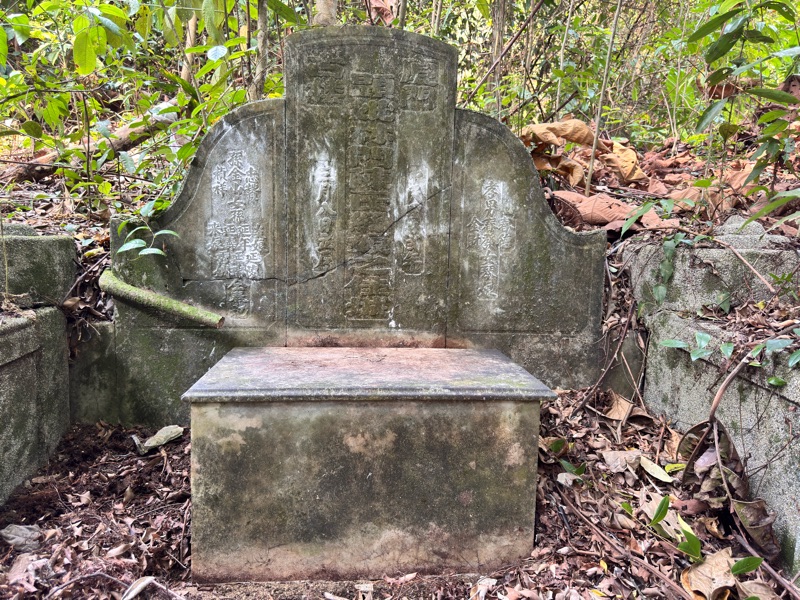
Tomb inscription 墓碑碑文
廈門古楼 (ancestral place: Gulou, Amoy / Xiamen)
中華民國廿弍年
三月八日立石 (Erected 8 March 1933) (NB: Republic of China year with Gregorian month and day)
顯妣林門陳氏絲娘之佳城 Tomb of Tan See Neo, of the Lim family
孝男 Filial sons
春發 Lim Choon Huat
春德 Lim Choon Teck
金財 Lim Kim Chye
女 Daughter
琴娘 Lim Khim Geo
孫 Grandsons
金山 Lim Kim San
忠贊 Lim Tiong Chan
禎祥 Lim Cheng Siang
女孫 Granddaughters
炎娘 Lim Yam Neo
延年
延壽
來娘
延陵
延瑞
秀娥
仝奉祀 (jointly offer worship)
Burial entry
Tan See Neo
Age: 64 years
Block 3 C, plot no. 560 D
Date of interment: 12 March 1933

Lim Kim San (1940s)
Lim Kim San Collection, courtesy of National Archives of Singapore

Lim Kim San (1990s)
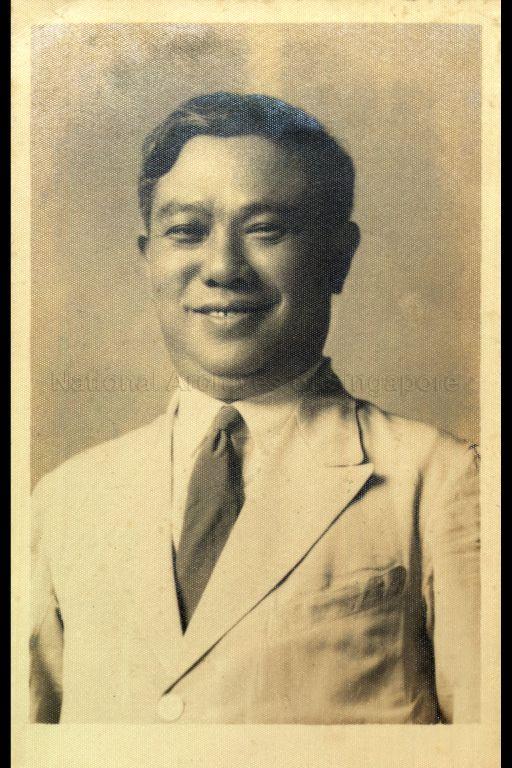
Lim Choon Huat, father of Lim Kim San
Lim Kim San Collection, courtesy of National Archives of Singapore
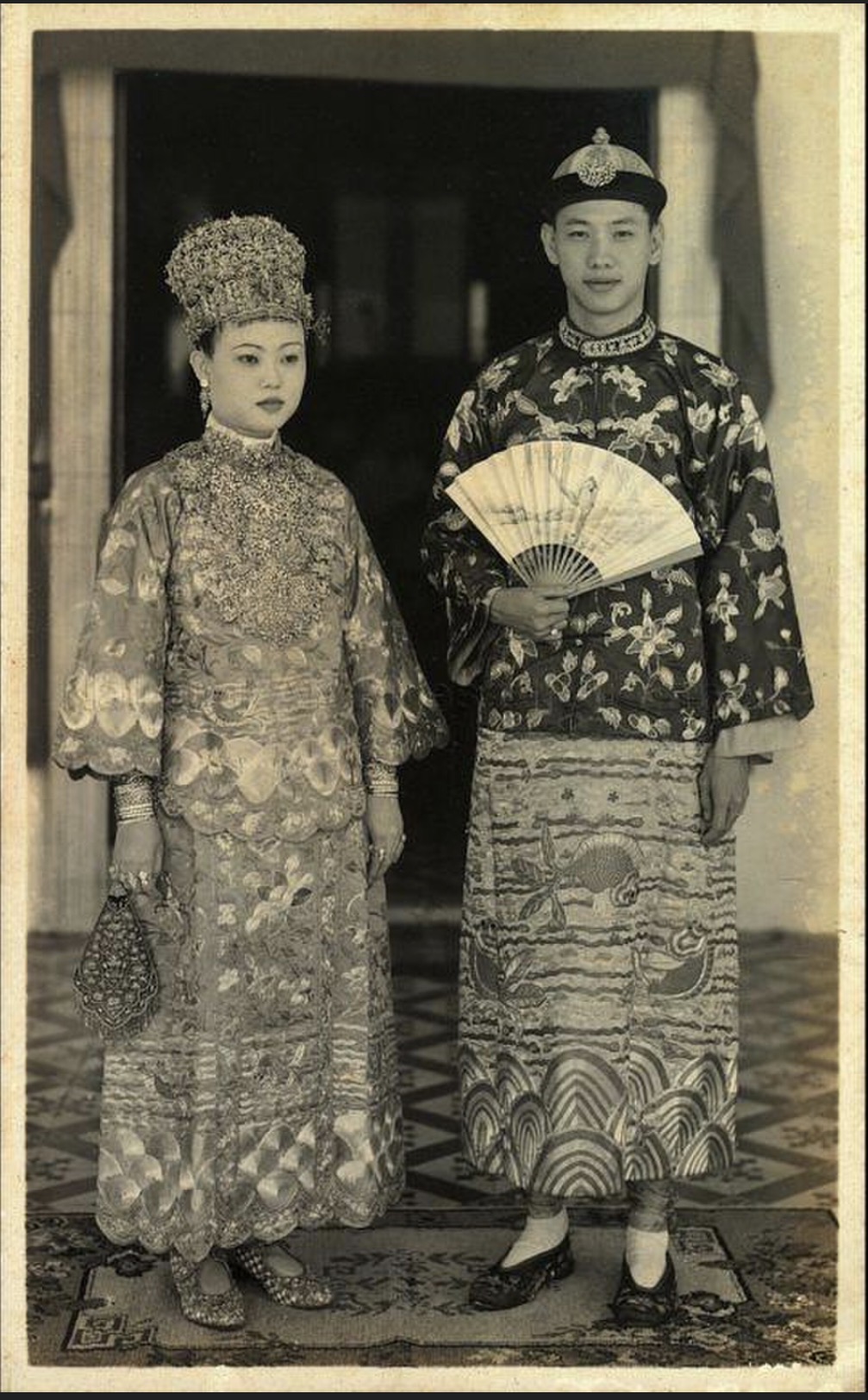
Wedding photograph of Lim Kim San and Pang Gek Kim in Peranakan wedding costume. Date not stated (the couple married on Feb 1940).
Lim Kim San Collection, courtesy of National Archives of Singapore
Lim Kim San and the Family Behind "Mr HDB"
When we talk about Lim Kim San, we usually talk about "Mr HDB" and the flats he helped build. But the tombstones and his own oral-history interview show us another side of him: a boy brought up in a large Peranakan family, a son who learnt business from his father, and later a grandfather who believed that the future had to be looked after.
There is also a touching contrast. In his interview, Lim said he did not know the names of his grandparents. Today, the tombstone helps us recover one of those names.
Timeline: from birth to death
Childhood and education
- 30 November 1916 — Lim Kim San was born in Singapore, the eldest son and eldest child in a family of six. His parents were Lim Choon Huat and Wee Geok Khuan. He grew up in a conservative Peranakan Chinese family, in an extended household living in a Straits Chinese-style bungalow in River Valley Road.[2][3] The biographies connect his parents' families with Sumatra, his mother's side with Bengkalis.[2] The tomb adds an older ancestral marker, 廈門古楼. Sumatra tells us about the family's more recent regional history, while the stone preserves a remembered link to an earlier Chinese place of origin. The exact route between the two is not recorded here.
- Childhood years — In his oral history, Lim remembered a crowded family home with relatives, cousins, servants, fruit trees and plenty of ground for the children to play football. He remembered travelling to Sumatra to see relatives and later moving with his immediate family to Somerset Road.[1]
- Education — He attended Oldham Hall and Anglo-Chinese School, then entered Raffles College when its economics department began, graduating with a diploma in economics in 1939.[6][7]
Business, war and family
- Late 1930s — Lim worked as a clerk with Straits Steamship and helped at his father's petrol stations.[2]
- 24 February 1940 — He married Pang Gek Kim, daughter of Pang Cheng Yean. (See the Pang Cheng Yean and Choo Peck Lian family entry.) They had six children, two sons and four daughters.[3]
- 1940s — Lim became involved in his father-in-law Pang Cheng Yean's Soon Hin Sago Factory while continuing to manage his father's interests. He mechanised the making of sago pearls, which helped him make his first million. The family's activities also included diamonds, jewellery, pawnshops, banking and petrol.[3][6]
- 1942–1945 — During the Japanese Occupation, Lim was detained and tortured. After the war, he returned to business.[3]
Public service and housing
- 1950s — Lim became a director of two banks and was known as a hands-on businessman.[6]
- 1959 — After the PAP formed the government, he was appointed to the Public Service Commission and became its Deputy Chairman.[3][5]
- 1960–1963 — Lim served as the first chairman of the Housing and Development Board.[5] ISEAS puts the early output at about 26,000 flats in three years;[3] Roots.sg gives "more than 31,000 flats in the span of four years" and says he did not draw a salary for four years.[6] The two sources count different periods, but the point is the same: HDB built in a few years more than the Singapore Improvement Trust had built in three decades.
- 1962 — He was conferred the Order of Temasek.[5]
- 1963 — He won the Cairnhill seat as a PAP candidate and became Minister for National Development. He was MP for Cairnhill from 1963 to 1980.[3][5]
- 1963–1981 — He held the portfolios of National Development, Finance, Interior and Defence, Education, Communications and the Environment.[5] In 1965 he received the Ramon Magsaysay Award for Community Leadership.
- 1971–1978 — Chairman of the Public Utilities Board.[5]
- 1979–1994 — Chairman of the Port of Singapore Authority.[3]
Later public life and death
- 1980–1981 — He left Parliament in 1980, while his last ministerial responsibility (the Environment) continued into 1981.[5]
- 1981–1982 — Managing Director of the Monetary Authority of Singapore.[5]
- 1988–2002 — Executive Chairman of Singapore Press Holdings, then Senior Adviser from 2003 to December 2005.[5]
- 1992–2004 — Chairman of the Council of Presidential Advisers. (NLB gives 1992–2004; ISEAS gives 1992–2003.)[5][3]
- 20 July 2006 — Lim Kim San died in Singapore at the age of 89, of pneumonia and old age. His wife, Pang Gek Kim, had died in 1994.[3]
Lim Choon Huat, his father
Lim Choon Huat was the first businessman Lim Kim San knew. He was involved in shipping and commodities, and from about four years old Kim San was brought to the family store and offices in Market Street. Kim San remembered the strong smell of rubber and sago, and the great amount of salt stored at Tanjong Rhu.[2]
The family dealt in rubber, salt, sago, gasoline and petrol stations. Kim San grew up seeing how goods moved and how workers had to be organised. Later, when he took charge of public housing, he brought that same practical mind to a much larger task.[3][6]
Kim San also remembered home life. His father wore a coat and tie. His mother wore a sarong kebaya. The family spoke Malay, some Hokkien and English, ate Baba food and practised Confucian customs. His mother visited a temple, while a Malay woman helped look after him.[1][2]
What the tomb remembers
In the oral-history interview, Lim was asked about his grandparents. His reply was honest:
"Unfortunately, I don't remember the names of my grandfather or grandmother nor did I ever ask my father."[1]
The tomb answers part of that. It records Tan See Neo, buried in 1933, names Lim Choon Huat as her son, and lists Lim Kim San among her grandsons. It also records the ancestral place, 廈門古楼. The interview tells us what Lim Kim San did not know; the stone tells us his grandmother's name, the family relationships and where the family traced its origin.
His grandfather's name is still unknown. The neighbouring plots in Block 3C are worth checking.
The graveyard question: ancestors and grandchildren
Lim recalled that a delegation of very old people, including one of his uncles, came to see him because the government was acquiring graveyards for housing. They argued that their grandparents and ancestors were buried there. Lim's response was:
"Do you want me to look after your dead grandparents or do you want to look after your grandchildren?"
According to the published account, the delegation had no reply and walked away.[1][2]
Reference: Lim Kim San, oral history interview with Lily Tan, Oral History Centre, National Archives of Singapore, accession 000526/21, Reel 11, pp. 5–6; see also Asad-ul Iqbal Latif, Lim Kim San: A Builder of Singapore (ISEAS, 2009), p. 150.
Sources
- Lim Kim San, oral history interview with Lily Tan, 13 February 1985, accession 000526. National Archives of Singapore.
- Asad-ul Iqbal Latif, Lim Kim San: A Builder of Singapore (Singapore: ISEAS, 2009). Cambridge Core.
- Lim Kim San Biographical Notes, ISEAS–Yusof Ishak Institute.
- Lim Kim San, Infopedia, National Library Board.
- Portrait of Lim Kim San, National Library Board.
- Lim Kim San, Roots.sg, National Heritage Board.
- Photograph of Lim Kim San, 1940s, National Archives of Singapore.
- Pang Cheng Yean and Choo Peck Lian, Singapore Tombstones Epigraphic Materials.
About this record
This entry is part of the Singapore Tombstones Epigraphic Materials (S.T.E.M.) archive, which records and transcribes tomb inscriptions at Bukit Brown and other Singapore cemeteries.
Cite this entry as: Raymond Goh, "Lim Kim San family: Tan See Neo 陳絲娘, grandmother of Lim Kim San", Singapore Tombstones Epigraphic Materials (S.T.E.M.), October 2026, https://tombs.bukitbrown.org/2026/10/lim-kim-san-family.html
Keywords: Lim Kim San 林金山, Tan See Neo 陳絲娘, Lim Choon Huat 林春發, Mr HDB, Bukit Brown, 廈門古楼, Amoy, Peranakan, Pang Gek Kim, Pang Cheng Yean, Singapore family history
Comments
Post a Comment