A Name Hidden in Stone
Most tomb inscriptions record a name. This one conceals it — then reveals it as praise.
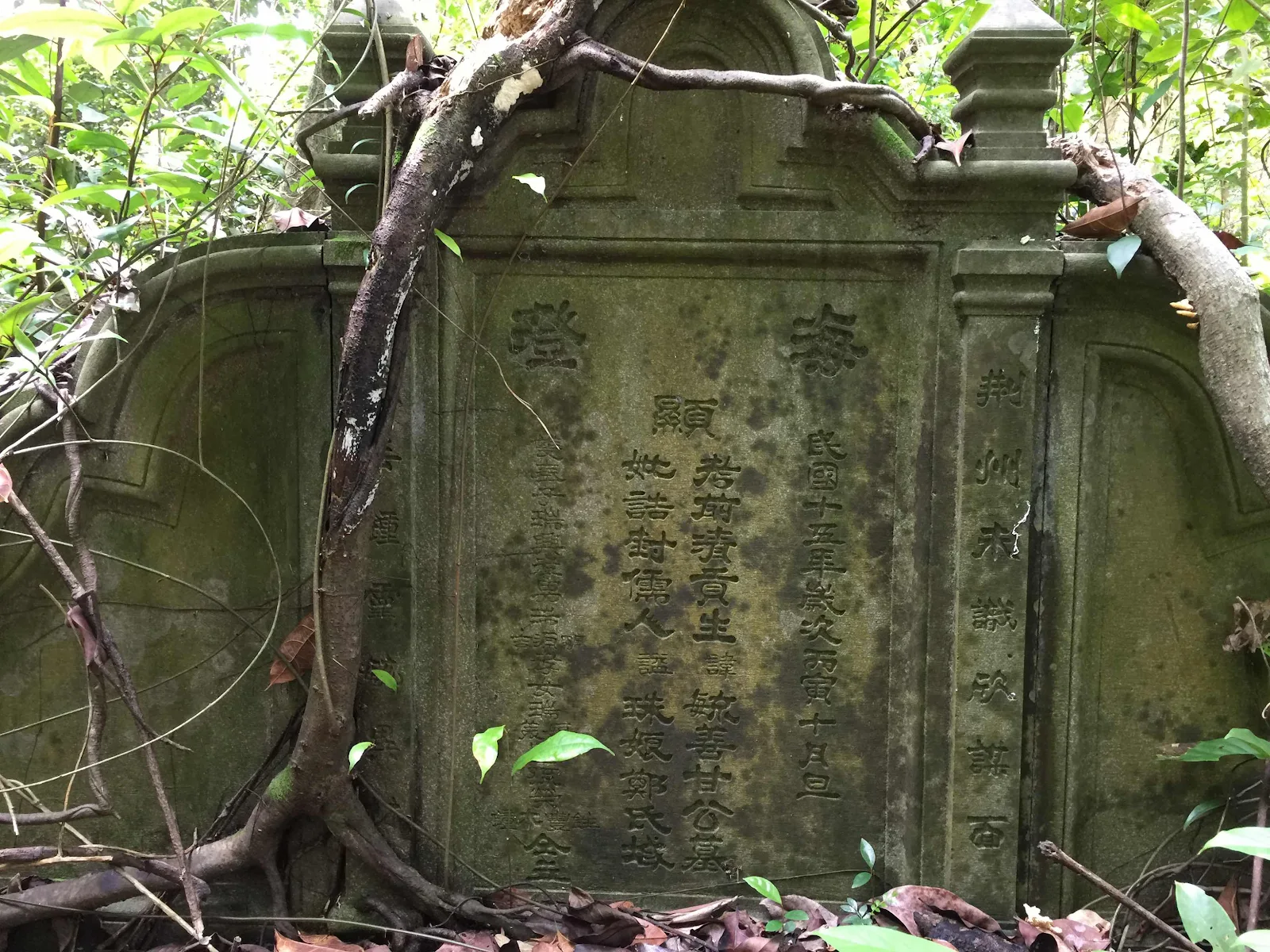
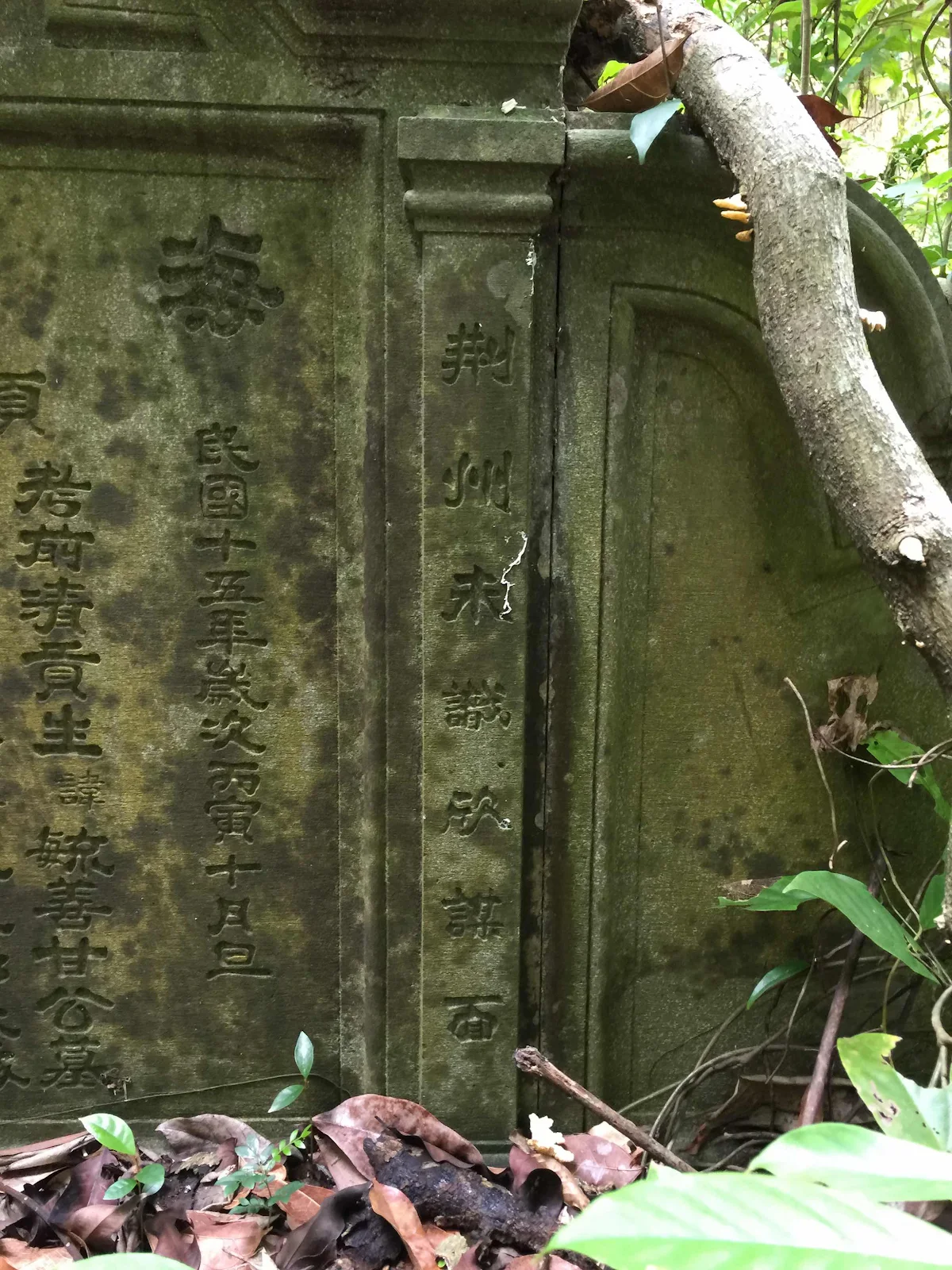
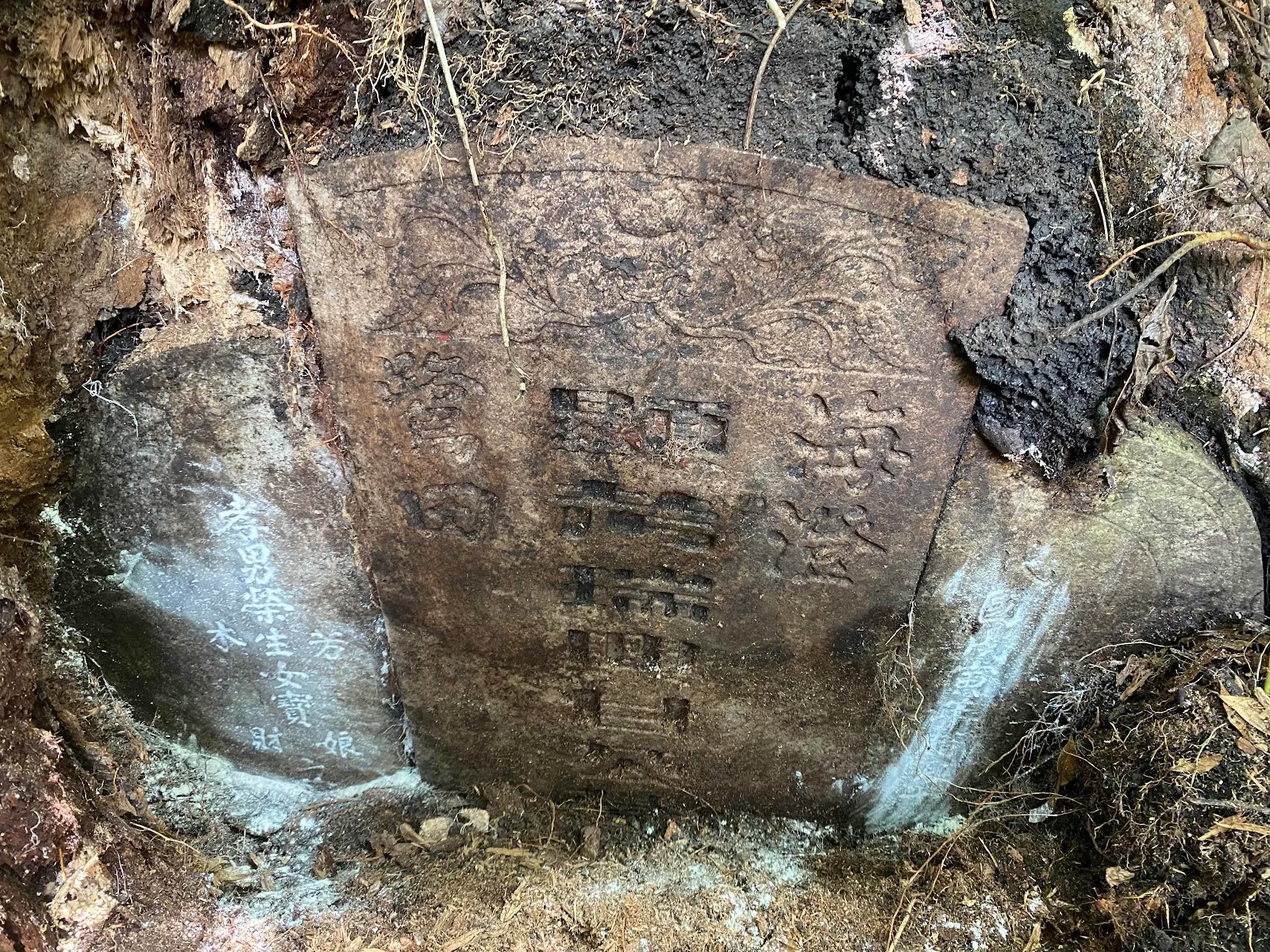
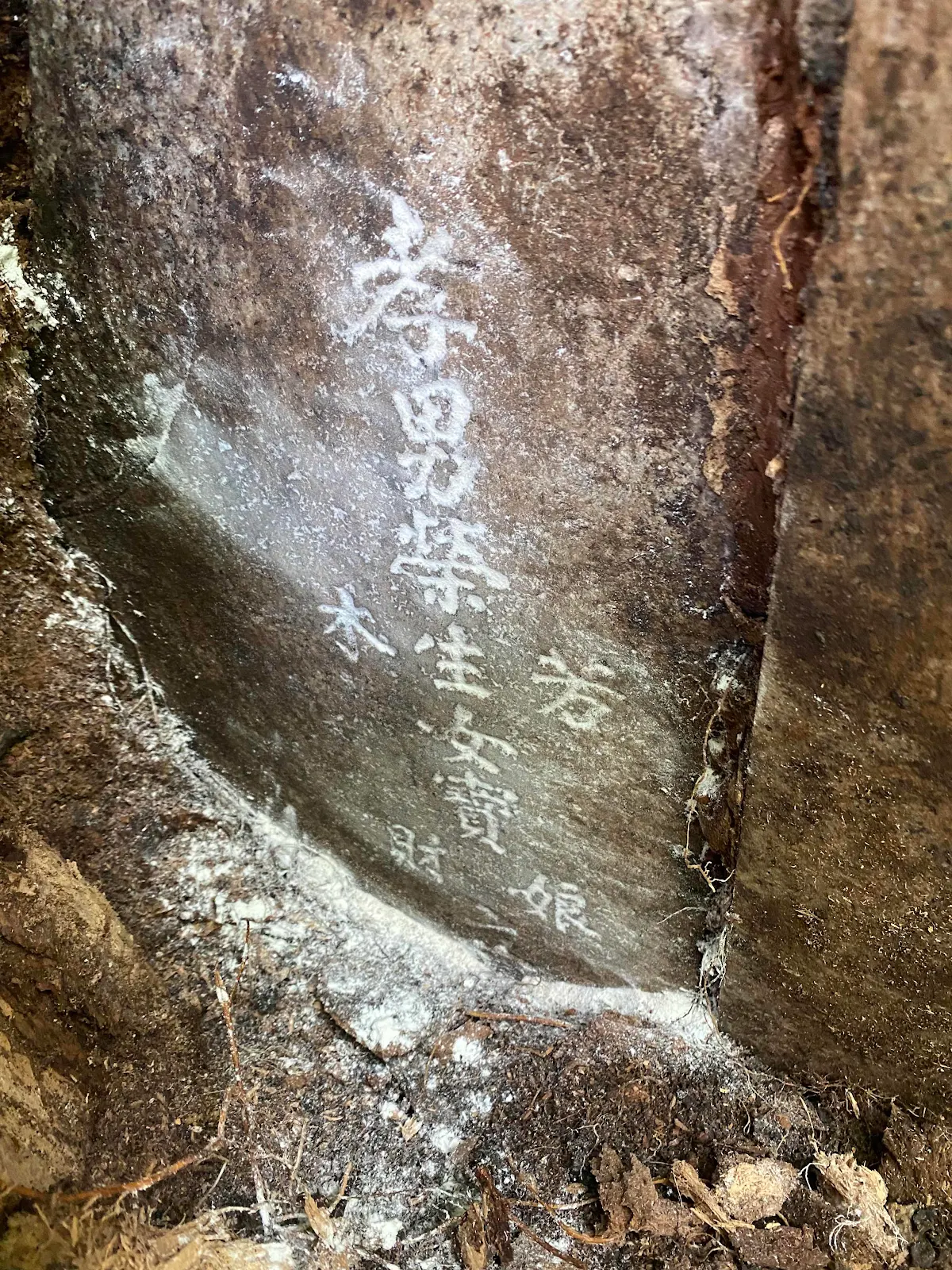
Above the resting place of Kam Keng Siang (甘荊祥), a 前清貢生 — a tribute student of the late Qing dynasty — is carved a classical couplet of quiet genius. To the casual eye it reads as a eulogy. To the trained eye, it does something more: it hides the deceased man's own name, character by character, at the head of each line. The name and the praise are one and the same thing.
This is the story of that couplet, and of the family buried beneath it.
From auspicious peaks the numinous spirit gathered —
nurturing a man of extraordinary gifts.
Two Layers of Art in Six Characters Each
The couplet achieves two things at once — and neither is accidental.
Read the first character of each line: 荊 and 祥. Together they spell the deceased's name — 荊祥 (Keng Siang). This technique, known as 藏頭 (zàngtóu, "hidden head"), embeds a name within a poem so that the tribute and the identity are inseparable. The man cannot be mourned without his name appearing first; his name cannot be spoken without the praise following immediately.
The Allusion to Han Jingzhou 韓荊州
The first line opens with 荊州 — but this is not merely a place name. It is a figure: 韓朝宗 (Han Chaozong), the Tang dynasty official who served as 荊州長史 (Administrator of Jingzhou), and who became so celebrated for his discernment and patronage of talent that he was simply known as 韓荊州.
Li Bai 李白, the greatest poet of the Tang, addressed him directly in his famous letter 《與韓荊州書》, writing the line that every classically educated reader would have known by heart:
但願一識韓荊州
one only wishes to meet Han Jingzhou once.
For Li Bai, meeting a man of Han Chaozong's moral stature was worth more than any aristocratic title. This became one of the most celebrated expressions of admiration in Chinese literary culture.
The composer of the couplet reaches directly for this allusion. The first line — 荊州未識欣謀面 — says: though we never had the chance to meet one like Han Jingzhou, how joyful it would have been to seek that encounter. Kam Keng Siang is cast in the role of Han Jingzhou himself: a man so worthy that Li Bai's famous wish applies to him.
The Second Line: Mountains and Destiny
The second line — 祥岳鍾霊毓異材 — shifts from longing to cosmic explanation. The character 岳 (sacred peaks) carries connotations of grandeur and moral elevation; 鍾霊 means the numinous essence of heaven and earth has gathered; 毓異材 speaks of nurturing a person of rare and exceptional gifts. Together the line declares that an auspicious confluence of forces produced this man of singular talent.
The composer achieved two things simultaneously: a 藏頭 acrostic that hides the name 荊祥 at the head of each line, and a classical allusion to Li Bai's letter to Han Chaozong that elevates Kam Keng Siang to the stature of a man Li Bai himself would have crossed rivers to meet. This is a remarkably learned inscription — entirely fitting for a man who held the title of 前清貢生.
Inscriptions & Photographs



Life & Dates
Born in China
12 noon, Monday, 30 October 1865
Died in Singapore
4 pm, Monday, 11 January 1926
Age at death: 61 years
Residence: 22 & 22-1 Kerbau Lane
前清貢生
Born in China
7 pm, 23 October 1869
Died in Singapore
3 am, Wednesday, 14 December 1938
Age at death: 69 years
誥封儒人
Kam Keng Siang — Block 1B, Plots 65 (reserved) & 66 — Died 11 Jan 1926 — Buried 24 Jan 1926
Tay Choo Neo — Block 1B, Plot 66 — Died 14 Dec 1938 — Buried 18 Dec 1938

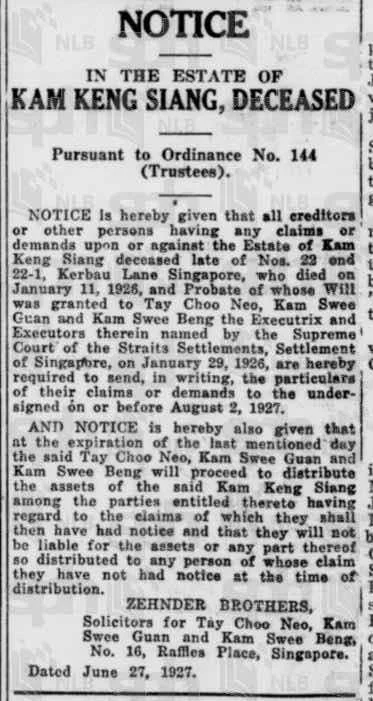
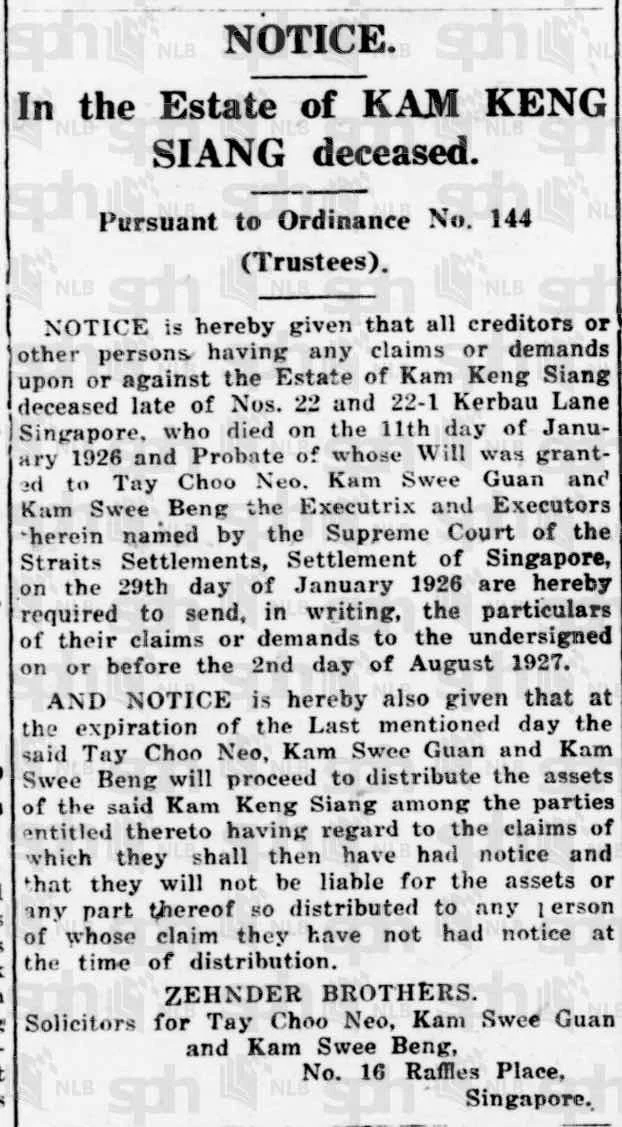
Mr Kam Keng Siang passed away on Monday 11 January 1926 at 4 pm at his residence at 22 and 22-1 Kerbau Lane. He was survived by his widow, four sons — Messrs Kam Swee Hin, Kam Swee Guan, Kam Swee Beng and Kam Swee Kiat — two daughters Kam Swee Neo and Kam Swee Bee, a son-in-law Mr Chua Cheng Quee, and several grandchildren. His funeral took place on Sunday 24 January 1926 at 10 am, to Bukit Brown.

Children & Grandchildren
瑞源 Kam Swee Guan
瑞明 Kam Swee Beng
瑞吉 Kam Swee Kiat
瑞美 Kam Swee Bee
Business & Community

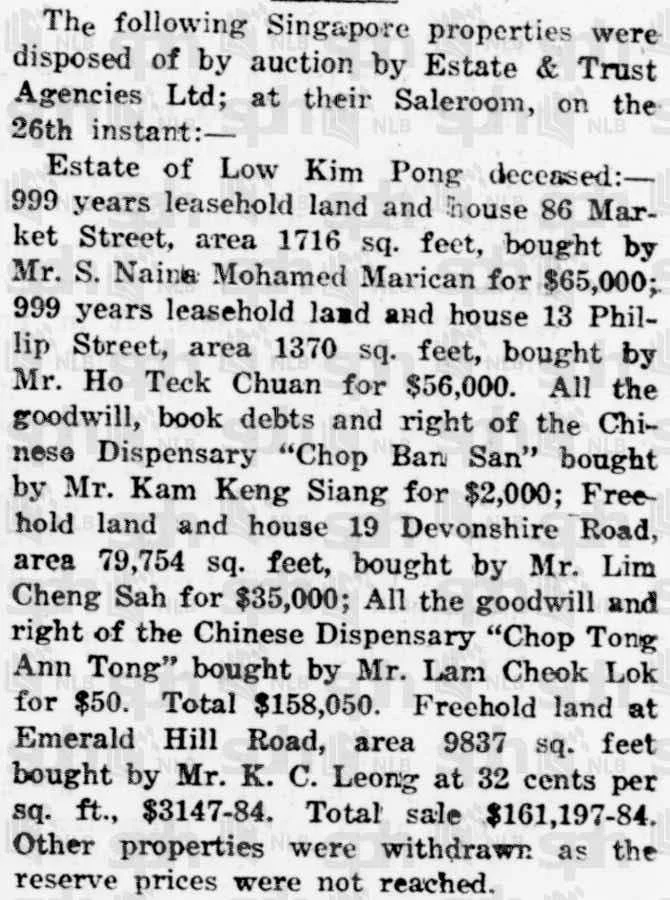
Kam Keng Siang purchased the goodwill, book debts and rights of the Chinese dispensary Chop Ban San for $2,000 from the estate of Low Kim Pong.

Chua Cheng Kwee (Chua Cheng Quee), son of Chua Hoh Seng, married Kam Swee Neo, daughter of Kam Keng Siang.
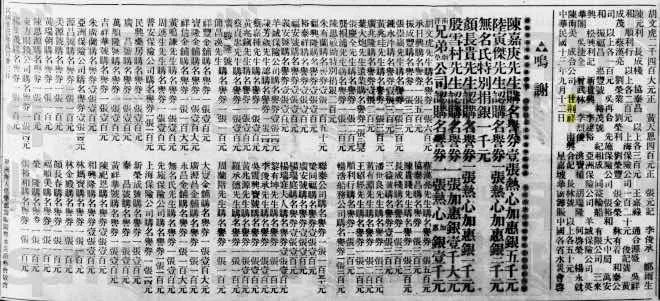


Kam Swee Hin
Kam Swee Hin was the adopted eldest son of Kam Keng Siang — most likely adopted from a close relative, possibly a brother, as he was born around 1887 when Keng Siang would have been only 22. He died on 7 February 1939, aged 51. Burial: Block 4C, Plot 920.
Brothers by birth: Kam Swee Siew (born circa 1880) and Kam Swee Hua.

Kam Swee Hin served as Cashier at Ching Keng Lee & Co, and later for the Estate and Trust Agencies — see The Straits Times, 28 May 1930: Chinese Who Handled Millions.
Kam Swee Guan


Died 6 August 1942, aged 44 (born circa 1898). Burial: Block 1B, Plot P122.
Son-in-law of Khoo Teng Hin. Chairman of Popular Aerated Water Works.



Kam Eng Cheong, only son of Kam Swee Guan, married Nellie Gan, daughter of Gan Hock Hoe.
Kam Swee Siew
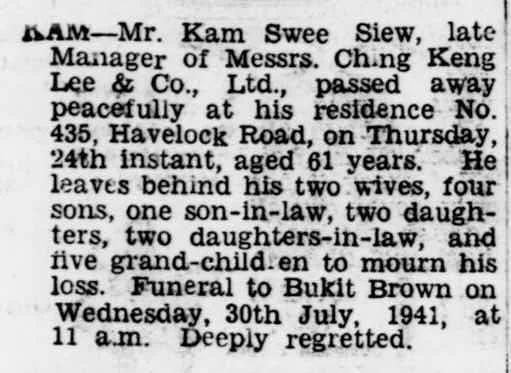
Grave No. 1112 · 甘瑞壽 · Kam Swee Siew
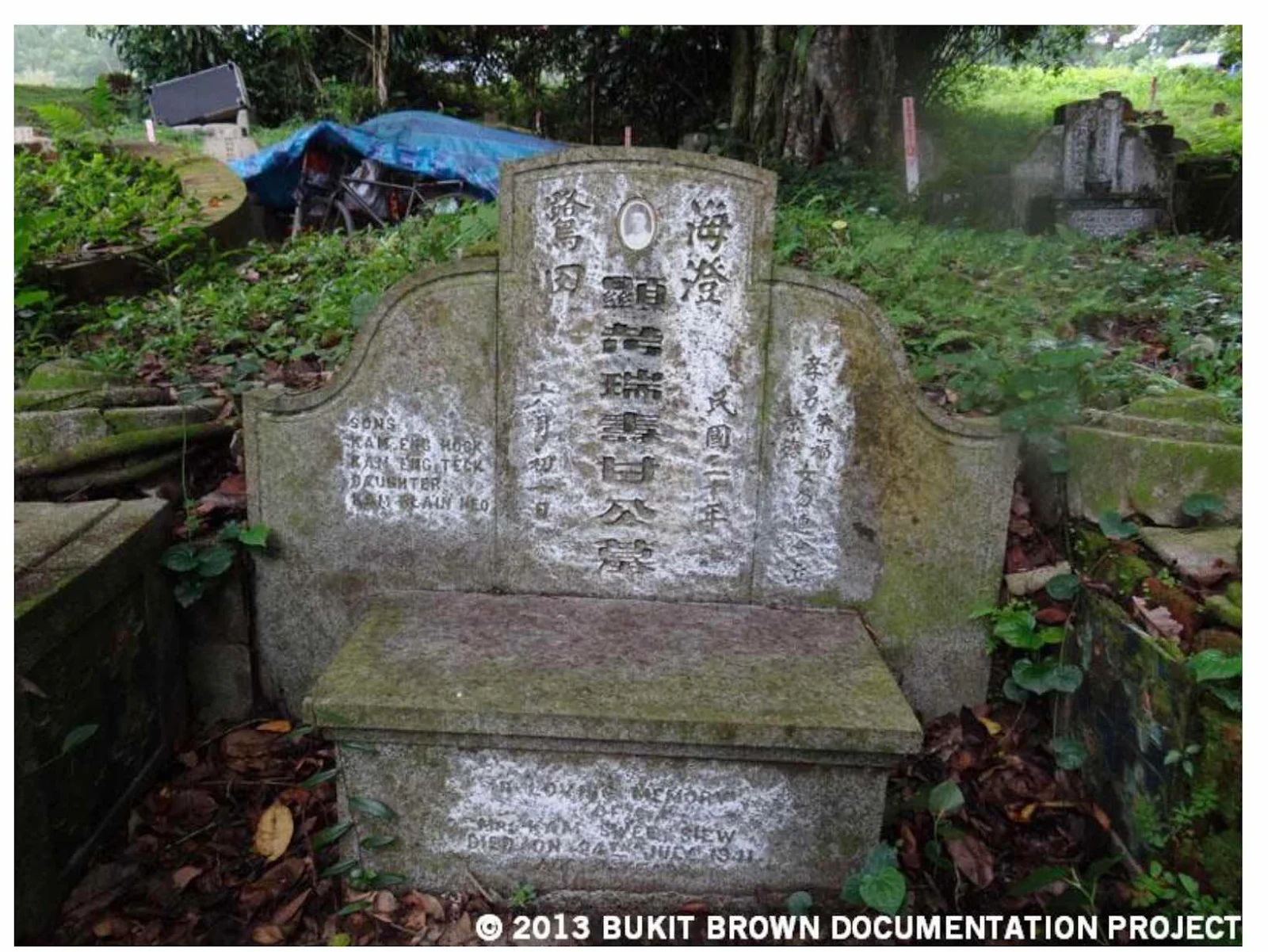
The couplet above Kam Keng Siang's tomb is among the more ingenious memorial verses in Bukit Brown. In twelve characters it accomplishes what lesser epitaphs require many more to attempt: it names the man, praises him by comparison to a figure Li Bai himself would have sought out, and declares that heaven itself conspired to produce him. The name and the tribute are hidden one inside the other — inseparable, as a man's character and his reputation rarely quite are in life, but sometimes become, in stone.
Comments
Post a Comment