曾幾生 (曾几生)
Chan Kee Seng
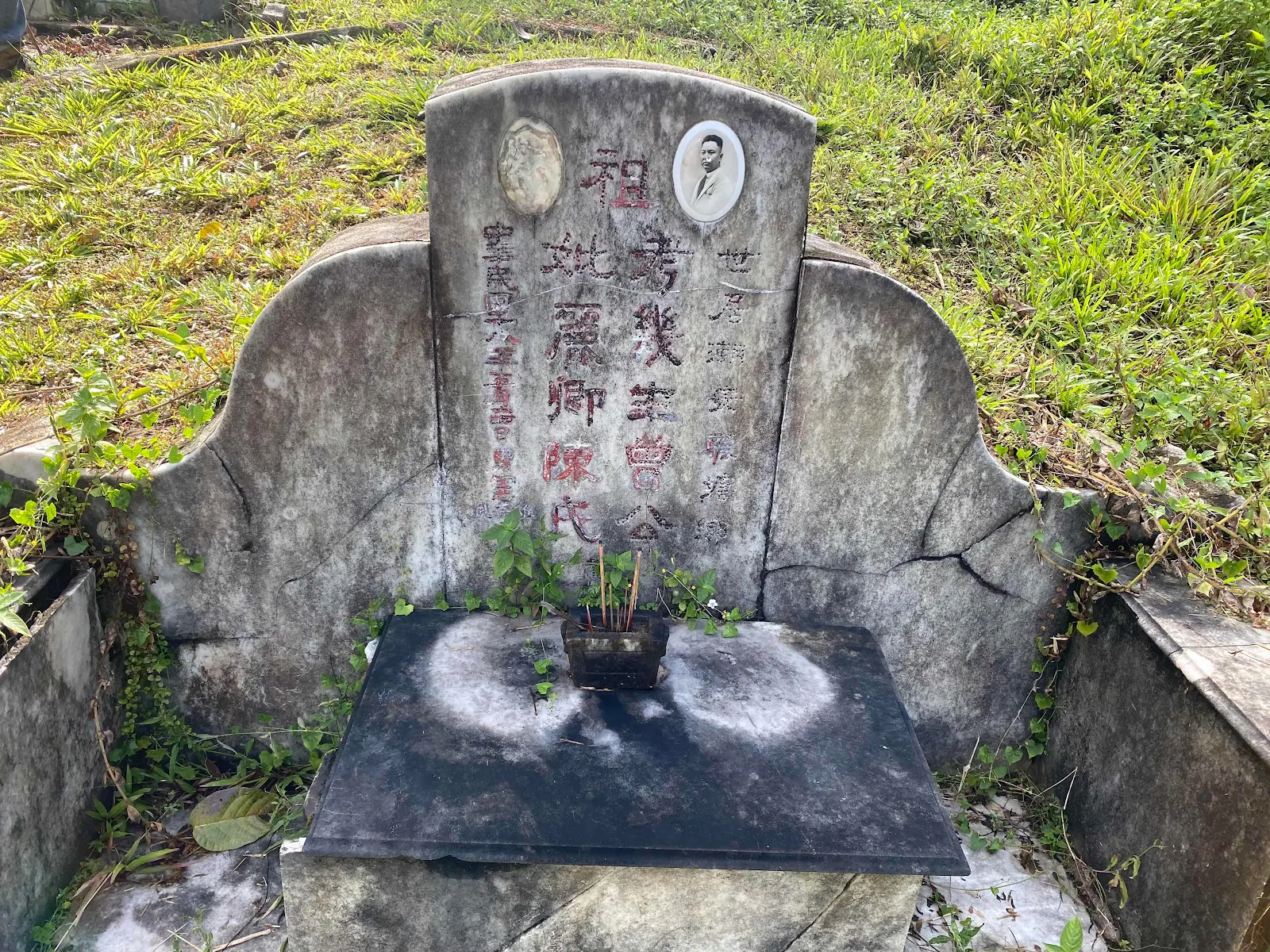
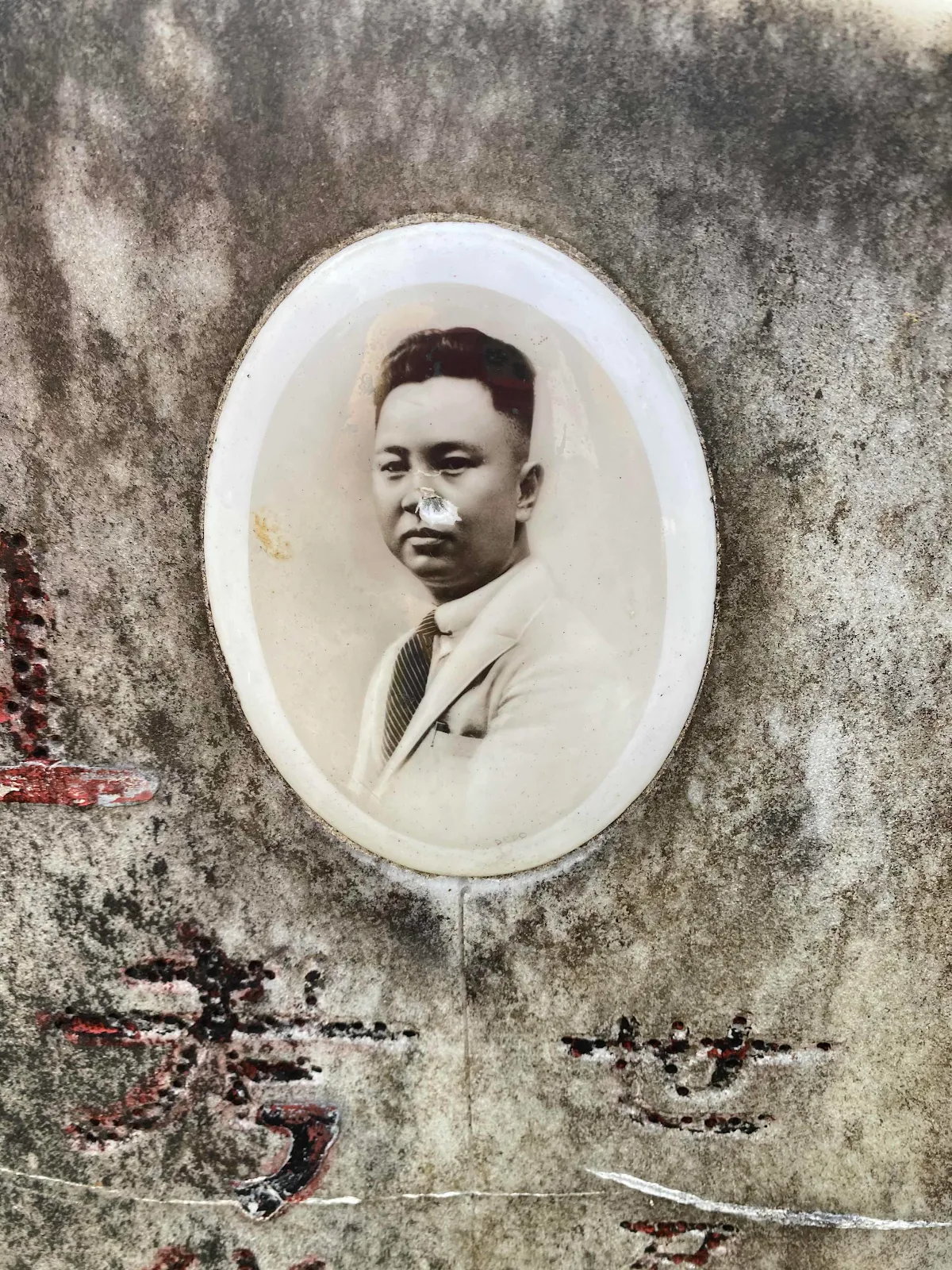
Bukit Brown burial record
Chan Kee Seng
Age 34 years old
Date of internment: 20 May 1929
Block 3 Div A plot no 201

世居潮安驪塘鄉
考幾生曾公
妣麗卿陳氏
中華民囻八年五月十四日
男
憲雄
憲?
憲武
立
DOMESTIC OCCURRENCE.
Malaya Tribune, 16 May 1929, Page 8
Mr. Chan Kee Seng,.
aged 34, on Tuesday, the 14th inst., at his residence, 301, River Valley Road, leaving behind his beloved
wife and 5 children to mourn his loss.
Funeral on Monday next, the 20th inst. (S.S., F.M.S., Shanghai and Swatow
DOMESTIC OCCURRENCES.
Malaya Tribune, 22 May 1929, Page 8
Mrs. Chan Kee Seng, Messrs. Chan Woon
Seng,Seah Peng Hong and Chai Eng Hee sincerely thank all relatives and friends who attended the funeral of the late Mr. Chan Kee Seng and those who sent messages of condolence
The late Mr. Chan Kee Seng son of Mr. Chan Kim Meng a sago pioneer in Malaya and only brother of Mr. Chan Woon Seng of Singapore.
The Straits Budget, 20 June 1929, Page 16
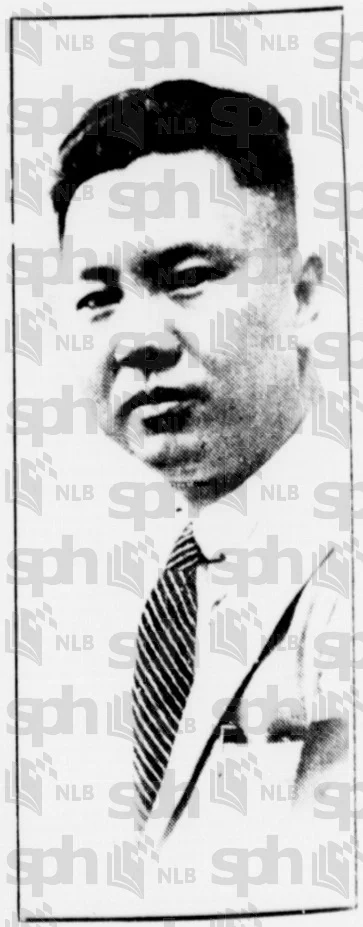 |
曾幾生君今晨逝世
星洲日報, 14 May 1929, Page 7
曾幾生系潮州人,為萬振義廠之主人,及南華貿易公司之總理,平素對社會公益極為熱心。青年勵志社為其所發起,歷任該社社長,青年勵志社改組後即被選為監察部長,現任中華女學校及華僑中學校校董事,舉凡對祖國有賑災事宜,曾君無不竭力奔走,可謂青年中之有為者,曾君不幸於今晨八時病故,聞者莫不同聲惋惜云。
Chan Kee Seng was a native of Chaozhou (Teochew). He was the owner of the Ban Chin Yi Factory and the manager of the Nan Hua Trading Company. He was typically very enthusiastic about social welfare and public good. Nanyang Chinese Students Society was initiated by him, and he served as its president for many terms. After the society was reorganized, he was elected as the Head of the Supervisory Department.
He currently serves as a board member (school director) for **Chinese Girls' School** and **The Chinese High School** (Hwa Chong). Whenever there were disaster relief efforts for the motherland [China], Mr. Chan would spare no effort in assisting and organizing; he can truly be described as a promising and capable young man.
Unfortunately, Mr. Chan passed away due to illness at 8 o'clock this morning. Those who heard the news all sighed with regret.
***
Lat Pau, 15 May 1929
Chinese obituary notice

THE LATE MR. CHANG KEE SENG. Singapore Free Press And Mercantile Advertiser, 12 June 1929, Page 18
THE LATE MR. CHANG KEE SENG.
A large and representative gathering of the Chinese community’s intelligentsia held an impressive and solemn Memorial Service on Sunday in memory of the late Mr. Chang Kee Seng, who died on May 14th. After the usual recital of prayers and the performance of the rites, the leaders of the Teochew, Hockien, Cantonese and Hakka sections briefly eulogised the merits of the deceased during his lifetime as a great worker in the fields of education, social welfare and commerce. In the execution of his manifold duties for the good of the public, no great and complicated problems had been left unsolved by the deceased, nor did he find any responsibility too great to be shouldered. Many a serious dispute between the Chinese merchants was amicably settled by Mr. Chang’s mediation.
An outstanding lifework of the deceased was the founding of the Nanyang Chinese Students’ Society, having for its main object the general uplift of its members to the higher social plane by popular education including the study of science, lectures and calisthenics. The Chinese film business of Malaya owes not a little gratitude to the foresight and initiative of Mr. Chang who years ago established the well-known film house under the style of Messrs. Nan Hua Trading Co. since the inception of this pioneer film house, many Chinese cinema firms have been established.
The teaching staff and students of all the boys’ and girls’ schools to which Mr. Chang had given his services felt that they had forever lost a great benefactor by his decease. The bereaved family to whom the greatest sympathy was tendered, lost a model chieftain, whilst the rising generation of the poor class loses the moral and financial support of this great philanthropist, whose untimely decease is greatly lamented by the whole Chinese community.—Contributed.
曾幾生君行狀
星洲日報, 12 June 1929, Page 18
曾君,諱幾生。廣東潮安人也。世居鸚塘鄉。滿清末葉。君父南渡營商。遂家於星洲焉。溯君於民國紀元前十六年八月五日。即夏歷丙申年七月初乙(1896年)。僑生於新加坡。蔣生時。母患難產。幸延醫得入。方脫危機。故以幾生名之。君生僅七日慈母見背。天之阨君。蓋亦甚矣。顧君天性和藹。宅心慈祥。年方弱冠。即出而為社會服務。時清政不綱。外患日迫。革命運動。乘時鼓盪。君富民族思想。求學之時。即從事民族解放之工作。以推翻滿清為職志。組織小團體於校中。捐資回國。贊助革命尤力。驚見校懸龍旗。輒忿然色變。課餘有暇。每招募同志。組織宣傳隊。促進社會改良。年十六畢業端蒙學校。嗣人華英學校。離校。已通英文。非三投身商界。任領長廠事。逾年。與陳麗卿女士結婚。廿五創辦青年勵志社。廿八創辦南華貿易公司。專售國貨。以挽利權。旋組織華僑印務公司。藉以宣傳文化。君於數奇命蹇之暇。為社會服務。歷任青年勵志社社長十年。附創夜校。注重國語。廣造英才。不犧牲金錢。耗費精神。而粉墨登場。現身說法。尤爲常事。所以該社於社會工作功績。昭然在人耳目。至南洋僑胞國語得以通行。未始非君提倡之力也。當歐戰時。日人奪我青島。國內同胞。羣起反對。胞響應者。雖不乏人。然茫然視爲痛癢無關者。亦實屬不少。君乃親出爲散發傳單。苦勸僑胞。與國人一致進行。作外交後盾。聞者惕然覺悟。愛國空氣。驟行緊張。君平素服務社會。無論國內外公益事業。如前天津水災。廈里角賑災。籌賑中國各省水災。浙災。日本火災。籌助汕災風災。華僑賑救潮汕兵災。
Biography of Mr. Chan Kee Seng
Mr. Chan, name Kee Seng, was a native of Chao’an, Guangdong. His family had lived for generations in Yingtang Village. In the late Qing Dynasty, his father traveled south to engage in business and subsequently settled in Singapore (Xingzhou).
Mr. Chan was born on August 5th, sixteen years prior to the founding of the Republic of China (1896), which corresponded to the second day of the seventh lunar month in the year of Bing-Shen. He was born in Singapore as an overseas-born Chinese. When his mother gave birth to him, she suffered from a difficult labor. Fortunately, a doctor was summoned and arrived in time to help her escape the crisis. Thus, he was named “Kee Seng” (meaning “survival” or “almost born”). Tragically, his mother passed away when he was only seven days old. Heaven’s hardship upon him was indeed severe.
However, Mr. Chan was naturally kind and gentle, with a benevolent heart. Upon reaching the age of twenty (weak crown), he immediately began serving society. At that time, the Qing government was failing in its governance, foreign threats were pressing daily, and the revolutionary movement was surging with the times. Possessing strong nationalistic thoughts, even while studying, he engaged in work for national liberation, making the overthrow of the Qing Dynasty his goal. He organized small groups within the school, donated funds to send back to the country, and strongly supported the revolution. Whenever he saw the Dragon Flag (the Qing flag) hanging in the school, his face would change with anger. In his spare time after classes, he would recruit like-minded comrades, organize propaganda teams, and promote social reform.
At the age of sixteen, he graduated from Tuan Mong School and subsequently entered the Chinese-English School. Upon leaving school, he had mastered English and then entered the business world, serving as a manager in a factory. The following year, he married Ms. Chen Liqing.
At the age of twenty-five, he founded the Nanyang Chinese Student Society. At twenty-eight, he founded the Nan Hua Trading Company, specializing in selling national goods to recover economic rights. Shortly after, he organized the Overseas Chinese Printing Company to spread culture. Despite his own ill fate and hardships, he served society. He served as the president of the Nanyang Chinese Student Society for ten years. He also founded a night school, emphasizing the National Language (Mandarin), and broadly educated talents. He did not hesitate to sacrifice money or exhaust his spirit, and it was common for him to appear in costume on stage (likely for propaganda plays) to explain principles personally. Therefore, the society’s achievements in social work were clear to all. The fact that Mandarin became prevalent among the Nanyang overseas Chinese was partly due to his promotion efforts.
During the European War (WWI), when the Japanese seized our Qingdao, compatriots in China rose up in opposition. While there was no lack of overseas Chinese who responded, there were indeed many who regarded it with indifference, as if it were irrelevant to them. Mr. Chan personally went out to distribute leaflets, earnestly urging overseas Chinese to proceed in unison with the people back home and act as a diplomatic backing. Those who heard him woke up with alarm, and the atmosphere of patriotism suddenly tightened.
Mr. Chan usually served society in public welfare causes, both domestic and foreign. For example, during the previous Tianjin flood, the disaster in Xiamen/Li/Jiao (likely specific regions), he organized relief. He organized relief for floods in various Chinese provinces, the Zhejiang disaster, and the fire disaster in Japan. He helped organize relief for the typhoon/flood in Shantou, and the Overseas Chinese relief for the military disaster (warlord conflict) in the Chaoshan region.
Father - Chan Kim Meng
父 - 曾锦明 , 曾汝平
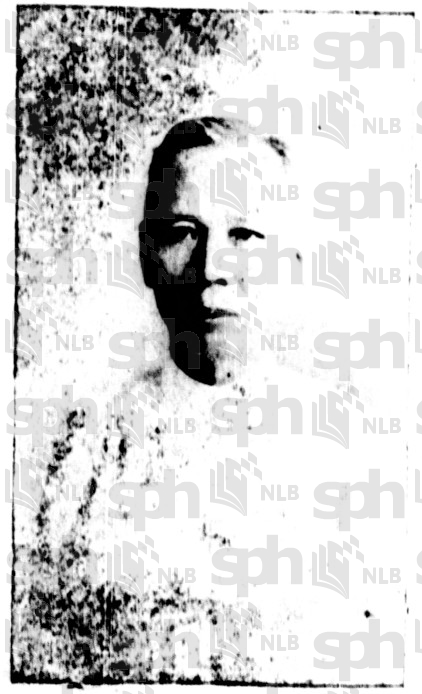
這篇刊登於 1930 年(民國十九年)4 月 21 日《星洲日報》第 19 版的完整訃告/悼文,全文文字整理如下:
星洲日报 (Xing Zhou Ri Bao), 21 April 1930, Page 19
悼曾汝平先生
曾先生諱錦明,字汝平,行二,粵之潮安縣人。前歷任本社社長曾幾生君之封翁也。先生生於民國紀元前四十九年,生於潮安縣之驪塘鄉。幼聰慧過人,慷慨有大志,性溫厚和平,精明穩健。弱勺之年,早丁外艱。十六南渡,由其族叔之提挈,任職森利,矢勤矢慎,毋曠厥職。越數年業大振。年二十,回國娶妻。廿一往荷屬承批碩莪餉務。十餘年間,鴻業不展。卅四回國省親,旋即南來,仍營故業。年四十四,與張順美合倒順榮美碩莪生理,得先生籌劃,獲利十餘萬金。年五十二,以股東意見紛歧,末由磅展懷抱,乃自創萬振芳碩莪生理,時僅三年,贏廿餘萬金。先生對於碩莪,獨具雙眼,另有心得,特著有碩莪說略一書,以曉示僑眾。並咽賽於馬藝展覽會,得一等獎章,以此深得僑胞信仰。歷任南洋碩莪商業會總理數年。此先生對於商業之努力過人有如此者。
先生服務社會,更為努力。本社創辦之初,精神物質,供咸缺乏。蒙先生竭誠贊助,不遺餘力。即本社原名「南洋青年勵志學社」,亦經先生所予定者。本社社友以先生對於本社,功績斐然,特舉先生為名譽社長。先生謙讓未遑,力為辭却,而實際則多所幫助。如前天津水災、夏里伯賑災、籌賑中國各省賑災、浙災、日本火災、潮汕八二風災、……諸役,先生均傾導本社同人,向僑胞勸捐,代呼將伯。蓋其勇往直前,急人之急,不避勞瘁,天性然也。此先生對於社會公益努力過人有如此者。
先生以幼年失學,深感教育之關於國計民生者,實為重大。以故對於華僑教育,更為熱心致力,多所貢獻。民國十年,任端蒙學校及中華女校總理。值教育條例之爭,先生奔走號呼,再往直前,不避艱險。僑胞均慕其勇敢,特舉為星洲代表,出席七州府教育會議。先生到會,慷慨陳詞,侃侃而談。到會代表,咸為動容。一致議決力爭,後竟不幸失敗。先生慷慨填胸,目眦欲裂,然已無及矣。先生又捐巨款,創辦崇德學校,該校董事,以先生慨解義囊,遠近咸欽,舉先生為總理,歷任三年。先生竭力主僕用遺留頓制,並每親身到校演說,勉勵學子,虛心求學,注重道德。學生以先生循循善誘,辜皆佩服,遵行勿背。該校之得有今日之成績斐然,詎非先生之功哉。此先生之熱心教育,努力過人有如此者。
民國十四,因其夫人仙逝,運柩回國。見家鄉風氣閉塞,因建議擴充鄉校,建築道路。其族人如夢初醒,羣起贊助。又見廣東省立第二師範學校圖書館,藏書無多,乃捐巨款,購置新舊各書。校長方乃斌,感先生之意,特以先生之名名其圖書館焉。時值黨軍東征勝利,現任國府參謀部長何應欽,師次潮汕。先生與何部長談論汕頭建設中山堂、中山公園,及如何改革嶺東諸大計劃。何部長極力贊許,歎為華僑特出人才。市長張永福與先生交久,知其賢,聘為實業科長。先生正擬發其新猷,利我嶺東。旋值市長去任,事不果行。先生慷慨好施,遇邏皆知,而故鄉變故時作,民窮財盡,有流為冠盜者,耳先生名,以為巨富之南洋伯也,掩其不備,攜於窮山中,索巨萬。先生窮不能應,乃百端對守望諸盜,曉以大義,開其自新。盜大良發現,大為感動。是夜挾先生走汕頭。先生以一度遇險,不能鄉居,挈其兩來。從此潮汕便少却整個綁匪矣。此先生之才高德重足以感人有如此者。
總先生一生,致力碩莪,提倡教育,熱心公益,慷慨好施。種種善德,美不勝述。而哲嗣曾君幾生,善體先生之意,善繼先生之志。凡社會公益事業,靡不傾囊以助,以致傾其家而喪其業,乃天不假年,不幸幾生君於去年天折。先生以環境壓迫,鬱鬱不樂,憂憤成疾,遍請中西名醫,皆束手無策。延至本年(民十九)四月九日,竟棄同人而長逝矣。享壽六十有八,積閏七十一歲,子二,孫十餘,女三,長適振興佘某君,次幼二女,未字人。向平之願尚未了也。嗚呼,傷哉,同人等以前哲之亡,老成凋謝,追念前功,情弗能己,爱敘楚此之片,用招大夫之魂,特為詞以悼之。
詞曰:
社會之楨。日邁七年。
好善彌篤。為仁者壽。
既富六穀。翩然鴻飛。
渺矣帝鄉。典型未遠。
教澤孔長。其風可懷。
其後允昌。中外仰德。
遺式馨香。
Domestic Occurences
Malaya Tribune 11 Apr 1930 Pg 8
Mr Chan Kim Meng of 301 River Valley Road, Singapore passed away at 11.40 am on Apr 9. He leaves one son, Chan Woon Seng (Chan Eng Yong) and an adopted son Chan Eng Hee., four daughters, one son in law Seah Peng Hong and a brother in law Chee Koon Chiang and 21 grandchildren to mourn his death
Related tomb - brother in law Chee Koon Chiang
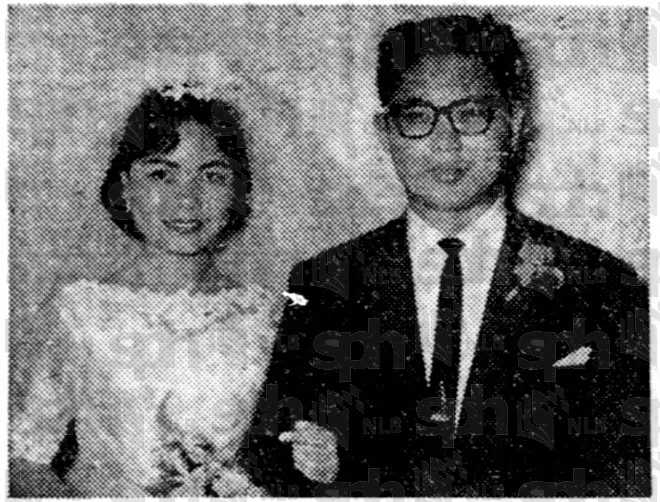
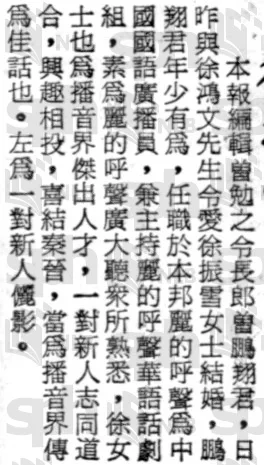
曾鵬翔徐振雪喜締良緣
星洲日报 (Xing Zhou Ri Bao), 17 September 1962
 |
 |
曾勉之令堂陳太夫人在潮安驪塘原籍仙逝
南洋商报, 25 February 1965, Page 12


Mrs Chan Kee Seng died in China on 10 Feb 1965 at age 73
Bye, Mr Mama Lemon
New Nation, 11 December 1979, Page 6
By Majorie Wong
Grandson of Chan Kee Seng
Bye, Mr Mama Lemon
New Nation, 11 December 1979, Page 6
by Marjorie Wong
After 18 years as a dee-jay and compere, Mr Chan Seng, or Chan Pong Siang as he is more widely known, has decided to call it a day in Singapore.
Mr Chan is leaving for Taipeh where he will take up the post of managing director of a new record company, which is a joint-venture between a local record company, Tony Wong Co, and some Taiwanese companies.
He will also host programmes for TV and radio stations.
However, Mr Chan said, his new life in Taiwan will not mean the end of his voice over the airwaves here.
He said he received “a lot of calls” from his fans after he announced his departure from Rediffusion.
“So I made arrangements with some companies to let me host charity programmes when I return on visits.”
Mr Chan said his decision to leave was based on this:
“When a person sticks to the same job for some time, he feels too settled. I need challenge.
“I have made a name for myself here. Now I want to know if I can do the same in Taipeh.”
Mr Chan, who hosts the Mama Lemon show, was a part-time announcer with RTS before joining Rediffusion as a junior programme assistant.
But he rose to the position of programme co-ordinator.
Reminiscing his 18 years as a compere, Mr Chan said: “It is not just the voice that makes a deejay. He must also be well-read and well-prepared. He must have a good command of the language and must be adaptable to the mood of the show.”
“It takes a lot to be a good deejay. It is even more demanding if you are hosting a live show. If the mood is fast, you must not slow down the pace. Also, you have to be spontaneous,” Mr Chan said.
Mr Chan “sang” his “swan song” at the Sony Festival at the World Trade Centre last Sunday. He leaves for Taipei today.
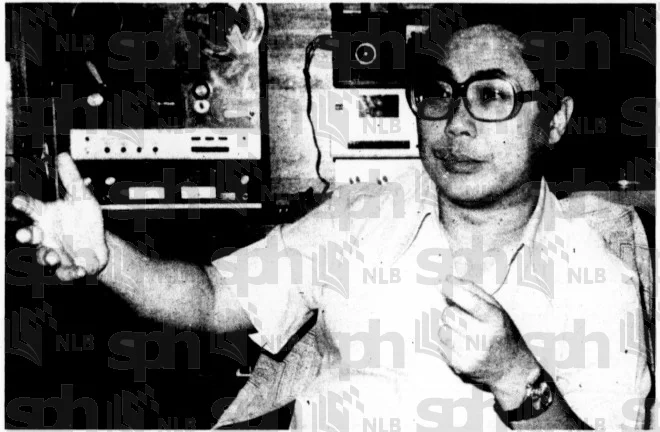 |
Chan Seng (Chan Pong Siang)
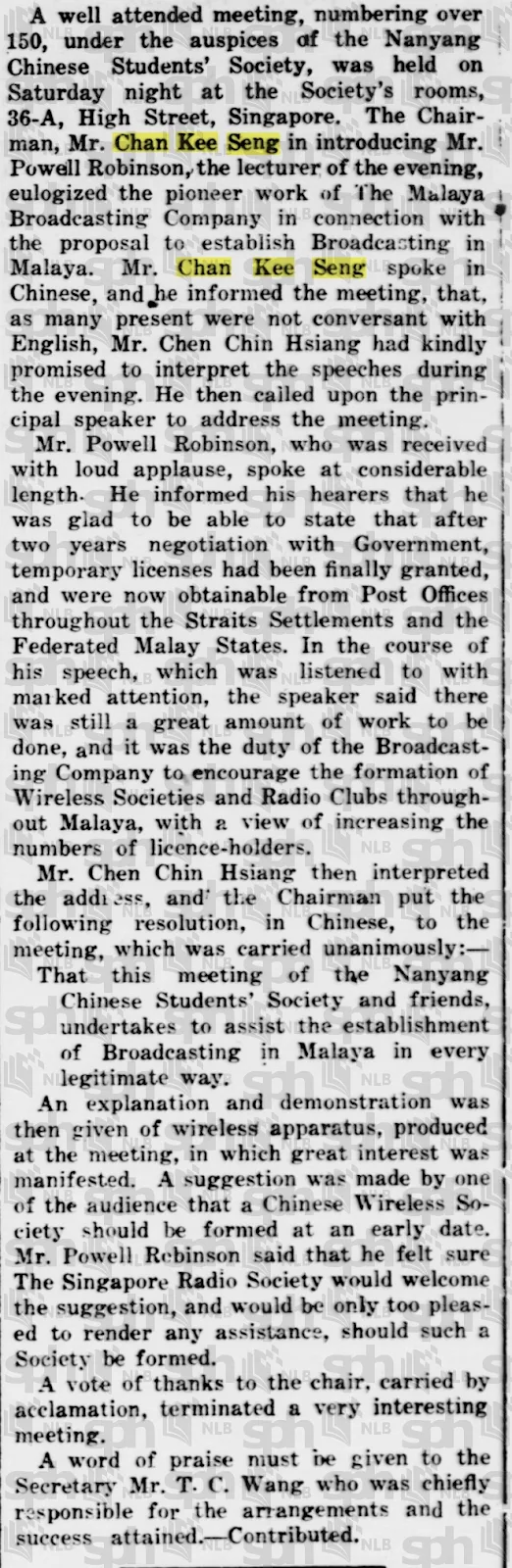
BROADCASTING IN MALAYA.
Singapore Free Press And Mercantile Advertiser, 10 June 1925, Page 356
 |
Additional reading : Making of a Silent Film
南洋商报(Nan Yang
Shang Bao), 1 July 1926,
Page 12
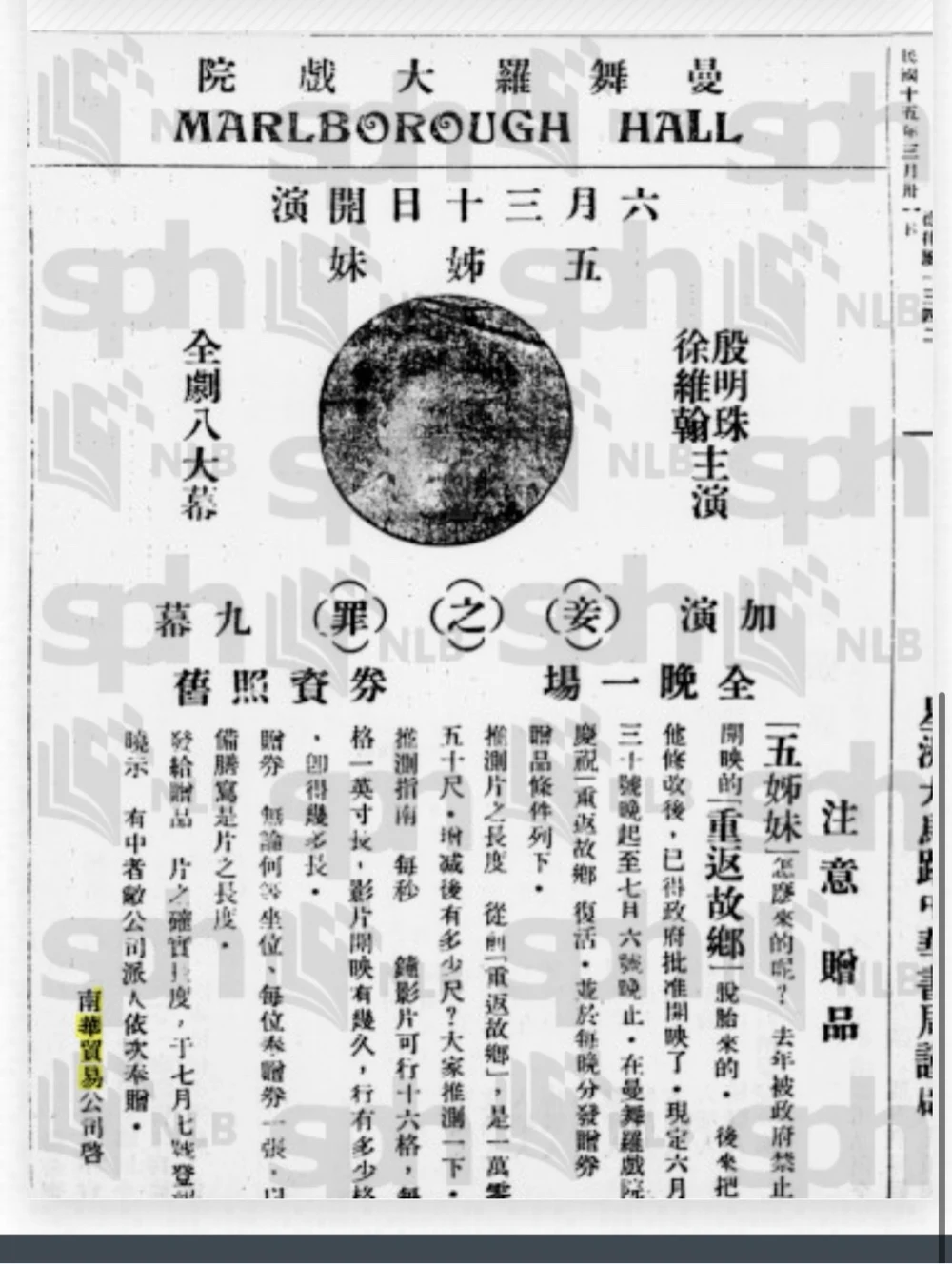 |
復活的被禁電影:1926年《五姊妹》的故事 / Resurrecting a Banned Film: The Story of "Five Sisters" (1926)
曼舞羅大戲院
MARLBOROUGH HALL
六月三十日開演
《五姊妹》
殷明珠
徐維翰主演
全劇八大幕
加演
《妾之罪》
九幕
全晚一場
注意 贈品
《五姊妹》怎麼來的呢?去年被政府禁止開映的《重返故鄉》胞胎來的。後來把他修改後,已得政府批准開映了。現定六月三十號起至七月六號止,在曼舞羅戲院慶祝《重返故鄉》復活。並於每晚分發贈品
贈品條件列下:
推測片之長度:從前一重返故鄉一,是一萬零五十尺,增減後有多少尺?大家推測一下。
推測指南:每秒鐘影片可行十六格,每格一英寸長,影片開映有幾久,行有多少格,即得幾多尺。
贈券:無論何等坐位,每位奉贈券一張,以備勝寫是片之長度。
發給贈品:片之確實長度,于七月七號登報示。有中者敝公司派人依次奉贈。
南華貿易公司啓 (Nam Hwa Trading Company Announcement
=========================================
MARLBOROUGH HALL
Opens June 30
Five Sisters
Starring Yin Mingzhu and Xu Weihan
Complete Drama in 8 Acts
Also Showing
"The Sin of a Concubine"
9 Acts
One Show Each Evening
NOTICE - GIFTS
How did "Five Sisters" come about? It was born from "Return to the Hometown" which was banned by the government last year. After modifications, it has now received government approval for screening. It is scheduled from June 30 to July 6 at Marlborough Hall to celebrate the "revival" of "Return to the Hometown." Gifts will be distributed each evening.
Gift Conditions:
Guess the Film Length: The original "Return to the Hometown" was 10,050 feet. After additions and reductions, how many feet is it now? Everyone, make a guess.
Guessing Guide: The film runs 16 frames per second, each frame is one inch long. Calculate how long the film runs and how many frames, and you'll get the footage.
Coupons: Regardless of seating class, each person will receive one coupon to write down their guess of the film's length.
Gift Distribution: The actual length of the film will be published in the newspaper on July 7. Those who guess correctly will be contacted by our company in order.
Nam Hwa Trading Company Announces
=========================================
當時的電影製作方式 (HOW THIS FILM WAS MADE AT THAT TIME)
=========================================
1. Censorship and Re-editing Process
- The original film titled "Return to the Hometown" (重返故鄉) was banned by the colonial government in 1925.
- The filmmakers had to modify and re-edit the content to meet censorship requirements.
- After editing, it was rebranded as "Five Sisters" (五姊妹) and received government approval.
- This shows films could be salvaged through strategic editing rather than being permanently banned.
2. Technical Specifications
- Film speed: 16 frames per second (standard for silent films).
- Frame size: Each frame was 1 inch long.
- Original length: 10,050 feet of film.
- Format: 8-act structure (typical for feature-length silent dramas).
- The film underwent additions and reductions during the re-editing process.
3. Production and Distribution
- Distributed by: Nam Hwa Trading Company (南華貿易公司).
- This was typical of the era when trading companies handled film distribution.
- The company handled importation, censorship negotiation, and exhibition.
4. Exhibition Strategy
- Venue: Marlborough Hall (a cinema on Beach Road).
- Run: June 30 - July 6, 1926 (one week engagement).
- Marketing: Interactive contest with prizes to generate interest.
- Positioning: Marketed as a "resurrection" or "revival" of the banned film, turning censorship into a selling point.
5. Silent Film Era Production
This was during the silent film era (before "talkies"), which meant:
- No synchronized sound.
- Reliance on intertitles for dialogue.
- Live musical accompaniment during screenings.
- Visual storytelling was paramount.
- Films were distributed as physical celluloid reels measured in feet.
\
Comments
Post a Comment